
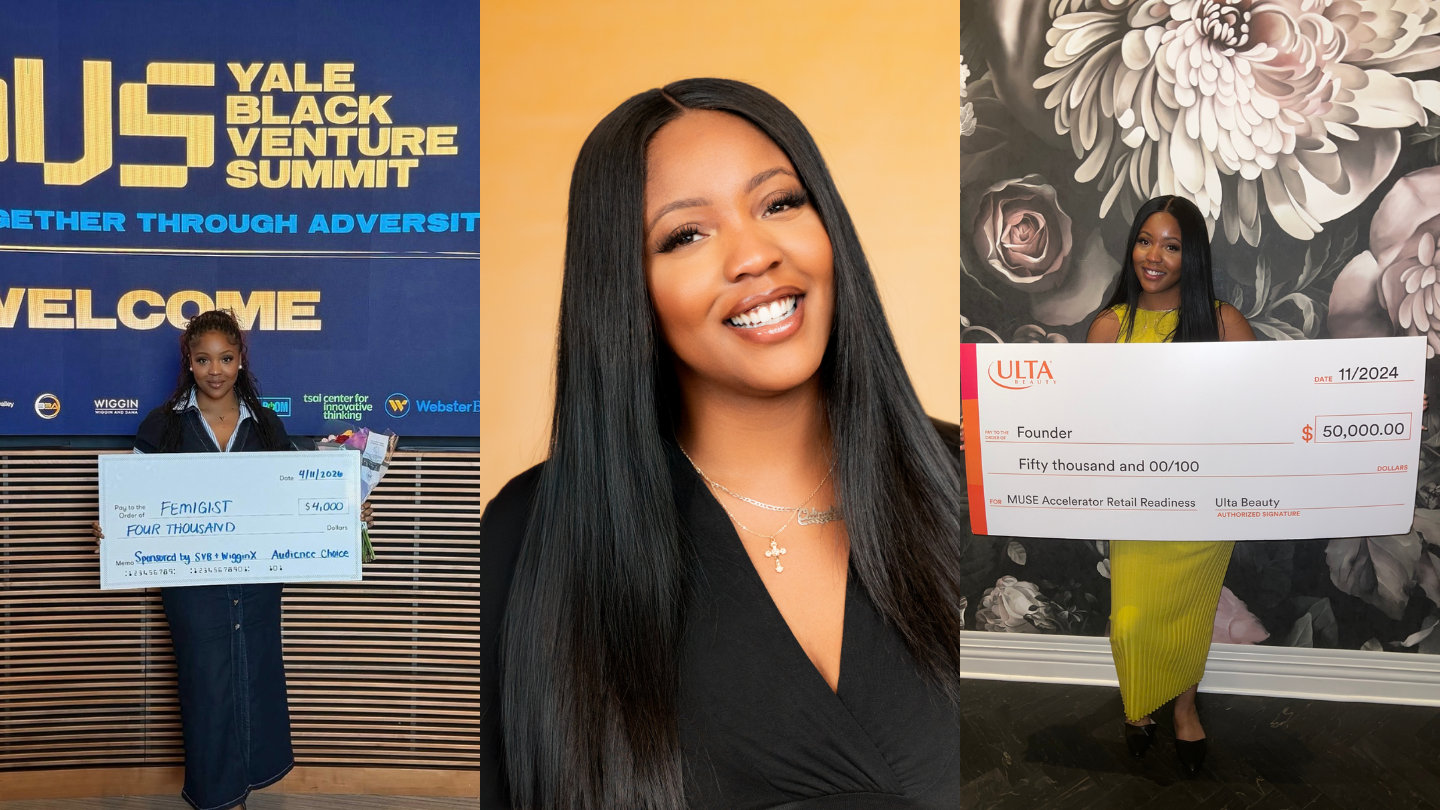
Amara Onwukaeme always thought she would become a lawyer - not a startup founder.
"I never in a million years thought I would start a hormonal care brand," she said.
Amara, the founder and self-described Chief Estrogen Officer of Femigist, entered Howard University planning to pursue law. Coming from a Nigerian family, becoming a lawyer represented the type of respected, stable career path that was easy to understand.
But while attending college in D.C., she lost her retail job because of her class schedule, but still needed another way to support herself.
"I was just like, I have to make money," she recalled. "D.C. is expensive. I have to find a way to make money and be able to sustain myself out here, especially while I'm away from family."
That need pushed her into entrepreneurship - a path she never dreamed of.
She taught herself how to make wigs, and began charging students $40. She then used the money from those services to purchase hair extensions wholesale. Her dorm-room business eventually became The Headline, a luxury hair extension company that generated approximately $250,000 in revenue before she graduated.
As you can imagine, running The Headline triggered something inside.
"I realized that entrepreneurship is what I was born to do," she said. "Nothing woke me up more."
Years later, Amara would draw on that same resourcefulness to build Femigist. This time, she would also learn that scaling requires capital—and that founders can find it beyond traditional sources like bank loans and venture capital.
Fast-forward to today, Femigist has now served more than 40,000 customers, built a community of approximately 250,000 people and generated $1.5 million in lifetime sales. Along the way, Amara has also secured more than $150,000 through grants and pitch competitions (many of which she learned about through Capital Klub).
The easiest way to find startup funding is here. Get access to the latest grants, accelerators, and pitch competitions for your business.
We recently spoke to Amara about her road to entrepreneurship, lessons learned, and how she secured funding for her business.
Her journey offers early-stage founders a key lesson: When pursued consistently and used intentionally, non-dilutive funding can become part of your company's growth strategy.
Lesson 1: Build an audience around the problem before selling the solution
The idea for Femigist grew from Amara's own experience with hormonal health issues.
Since high school, she had dealt with severe cramps, acne, fatigue and facial hair growth. Yet doctors frequently treated her symptoms as something that "just sometimes happens" or redirected her from one specialist to another.
"The OB-GYN would say, 'I don't do skin.' The dermatologist would say, 'I don't do hormones,'" she explained.
Then, after years of trying to manage the symptoms herself, Amara experienced a sharp abdominal pain that sent her to the hospital. Doctors discovered that an ovarian cyst had ruptured and told her that her symptoms aligned with PCOS.
The diagnosis offered validation, but not the clear plan she expected.
"I'm like, okay, I have a name, but it didn't come with a solution," she said. "When we are diagnosed, it's still like, now what?"
That question became bigger than her personal experience.
Amara began talking about her hormonal health journey on TikTok. Women who had also felt confused, dismissed or underserved related to her content – and were hooked. Before launching her hormonal care brand, she built an audience of approximately 30,000 followers.
Amara's first product was a tea created from ingredients she had been using herself. Instead of waiting to create an expansive product line, she introduced it to the audience she had already built.

"I'm gonna release a tea and see how they respond," she recalled to Mogul Millennial.
And her TikTok community responded by buying it.
Lesson #2: Build evidence before asking for significant capital
The tea product gave Amara something more valuable than a promising idea: proof that people were willing to pay for a solution.
“I was getting sales,” she said. “I was like, okay, this is helping women.”
Many founders assume they need funding before they can create traction - don't be fooled.
Amara’s approach shows the opposite. By building an audience, launching a small product and watching how customers responded, she created evidence that made Femigist more credible to funders.
Before seeking significant capital, ask what you can prove with the resources you already have:
- Sell a small batch or collect preorders
- Run a pilot with a few customers
- Build an engaged audience or customer community
- Test a manual version of a future product
- Track testimonials, repeat purchases or waitlist growth
You do not need everything figured out, but you do need to show that you have some kind of motion.
Funders are more likely to support a founder already making progress than one waiting for money to begin.
Lesson #3: Start with one clear problem—not the entire market
Once Amara knew customers were willing to buy, her next decision was what Femigist should become.
Hormonal health is broad. PCOS can show up through acne, irregular periods, facial hair, hair loss, weight changes and fertility concerns. Addressing every symptom at once could have made her brand difficult to understand—and very expensive to build.
“My immediate thought wasn’t to solve for every single type of PCOS, because it exists so differently amongst every woman,” she said.
Femigist instead built a focused product system around hirsutism, or unwanted facial hair, before expanding its vision into hormonal acne, hair loss and, eventually, menopause.
Your first offer does not have to represent your entire vision. It needs to give a specific customer a clear reason to choose you.
Ask yourself:
- Which problem feels most urgent?
- Which problem do I understand especially well?
- What is the smallest useful solution someone will buy?
- If it works, what is the logical next offer?
Remember: A focused starting point does not make your vision smaller. It gives you a stronger foundation for growth.
Lesson #4: Treat grants as a strategy, not a lucky break
With demand and a clearer product focus, Amara was in a stronger position to pursue capital.
She began applying for grants and entering pitch competitions—something she had practiced while building The Headline at Howard. Over time, those opportunities added up to more than $150,000 in non-dilutive funding.
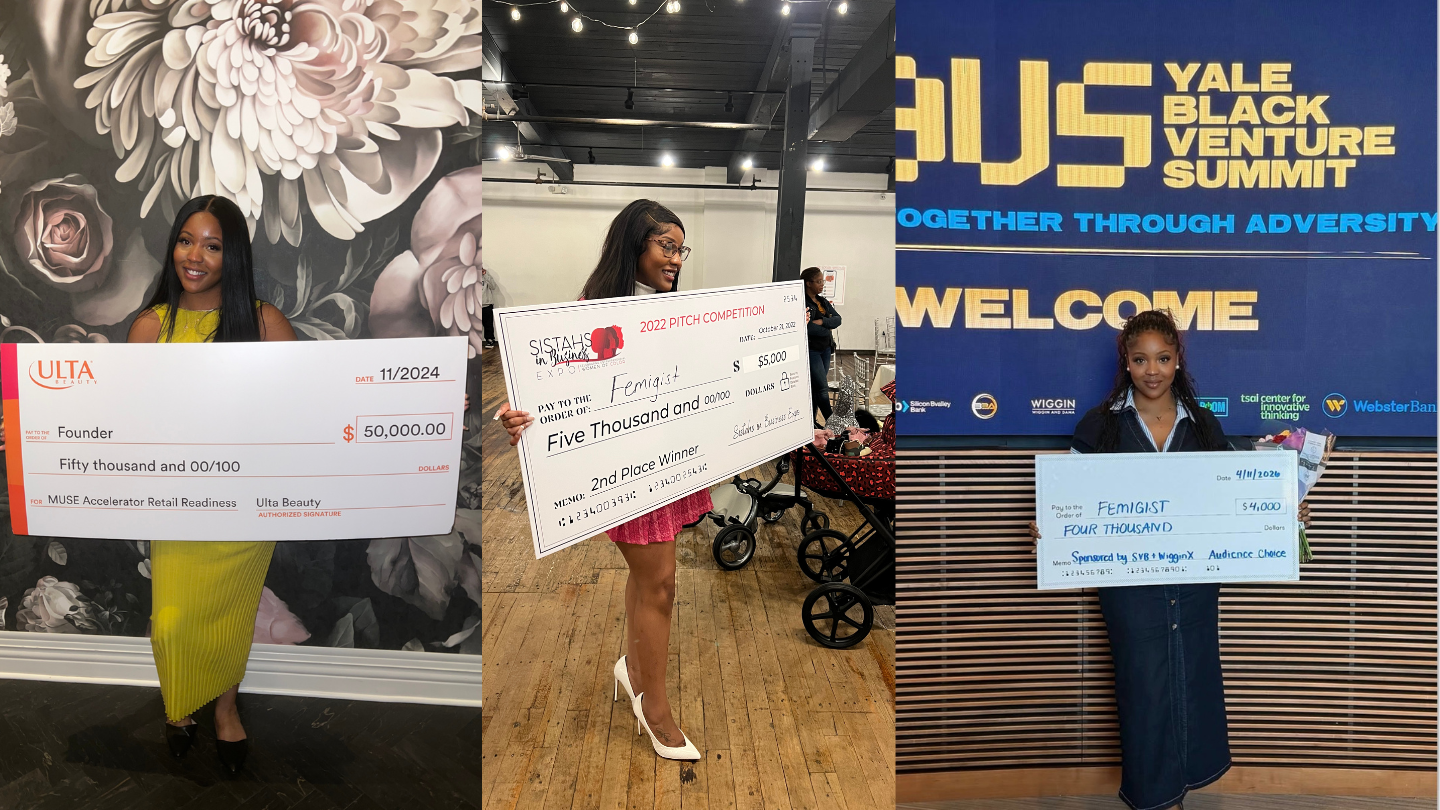
In case you're unfamiliar, non-dilutive funding allows founders to receive capital without giving up ownership. But winning it consistently takes more than occasionally submitting an application.
Create a repeatable system:
- Search for relevant opportunities every week (Capital Klub is a founder-friendly platform you can use)
- Track eligibility requirements and deadlines
- Keep frequently requested documents together
- Maintain current revenue, customer and impact metrics
- Save strong answers that can be tailored for future applications
- Record what you applied for and what you learned
Capital Klub helps founders find funding for their business.
Lesson #5: Show exactly what the funding will unlock
Securing capital is only part of the work. As a founder, you also need a clear plan for how it will move your business forward.
Amara used her funding to test products, purchase inventory, strengthen formulations and hire manufacturers, Black chemists and branding professionals. Her goal was not simply to get grants and spend it casually; it was to build a company capable of serving more customers.
As a founder, it's important that you connect the funding you're asking for to a realistic, compelling outcome.
Instead of saying, “We will use the grant for inventory,” explain how many units you will purchase, how many customers you can serve and the revenue or capacity it could create.
A strong use-of-funds answer explains:
- What you will invest in
- Which constraint it will remove
- What measurable result you expect
- How the result will strengthen the business
Use this formula:
This funding will allow us to [specific action], which will improve [metric or process] and help us achieve [measurable outcome].
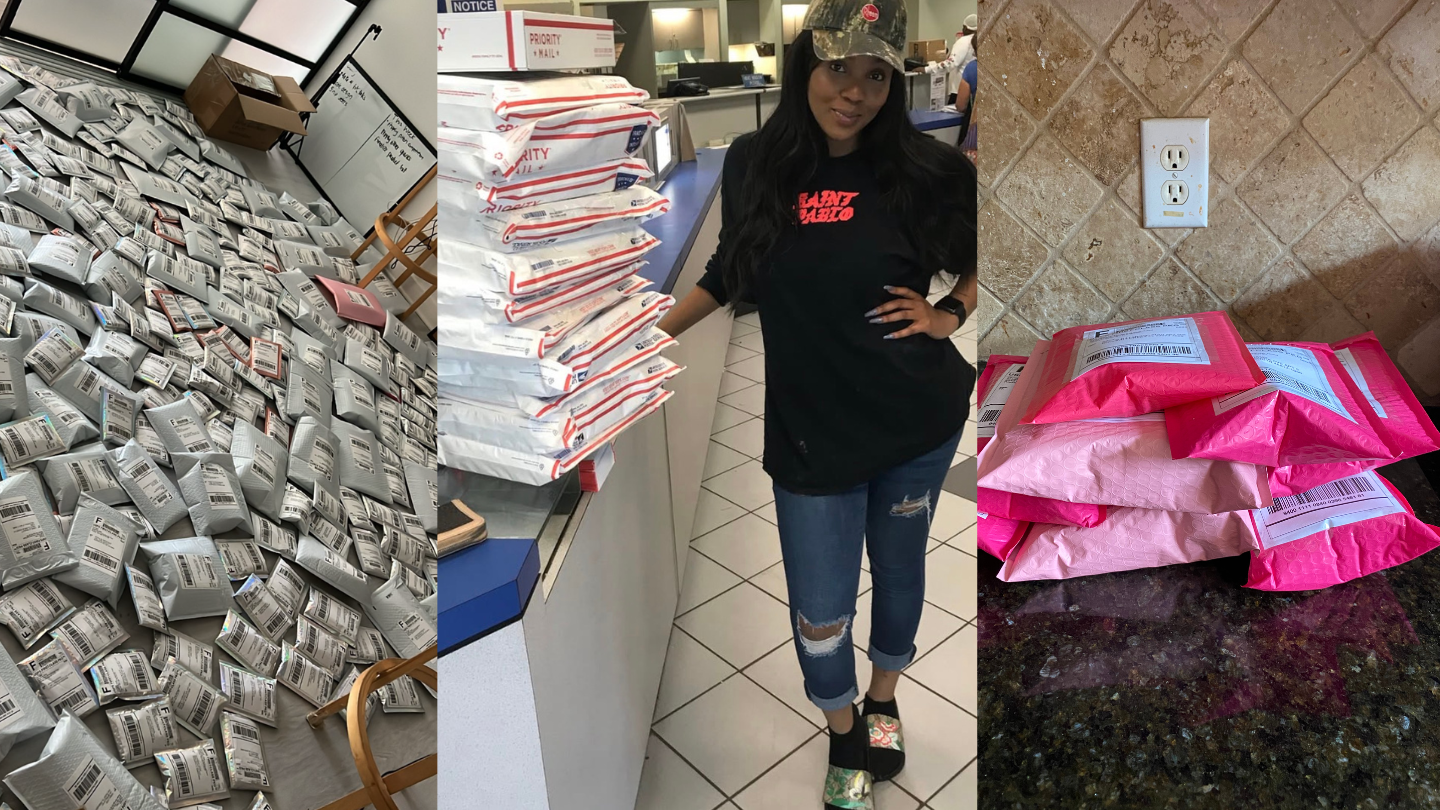
Lesson #6: Use the money to learn—and pivot when needed
Not every Femigist product performed as she expected. Some inventory, including feminine wipes and other products, did not generate enough return. Rather than continuing to add products for every possible customer, Amara learned to focus on what was working and make it better.
Before committing funds, ask yourself:
- What result would make it successful?
- How quickly will we know whether it worked?
- What will we stop doing if results are weak?
- Could this money create more value elsewhere?
As you explore this type of funding, know that non-dilutive does not mean consequence-free. A grant gives you room to experiment, but every dollar should still have a job.
Lesson #7: Pair your founder story with proof
Amara's story made her pitch memorable—but her strategy is what made her business fundable.
Amara's personal experience gives Femigist a compelling origin story. She understands the emotional weight of the problem because she has lived it.
But a personal story alone does not demonstrate that a business can grow.
The strongest grant applications and pitches connect four things:
- The founder’s connection to the problem
- Evidence that other people experience the problem
- Proof that customers want the solution
- A clear explanation of what the funding will unlock
For Amara, her story may open the door, but Femigist’s community, customer traction, sales and growth plan show why her company is worth funding.
As a founder, you should not choose between storytelling and numbers. The two should strengthen each other.
Your story explains why you care. Your traction proves that customers care. Your plan demonstrates that you know what to do next.



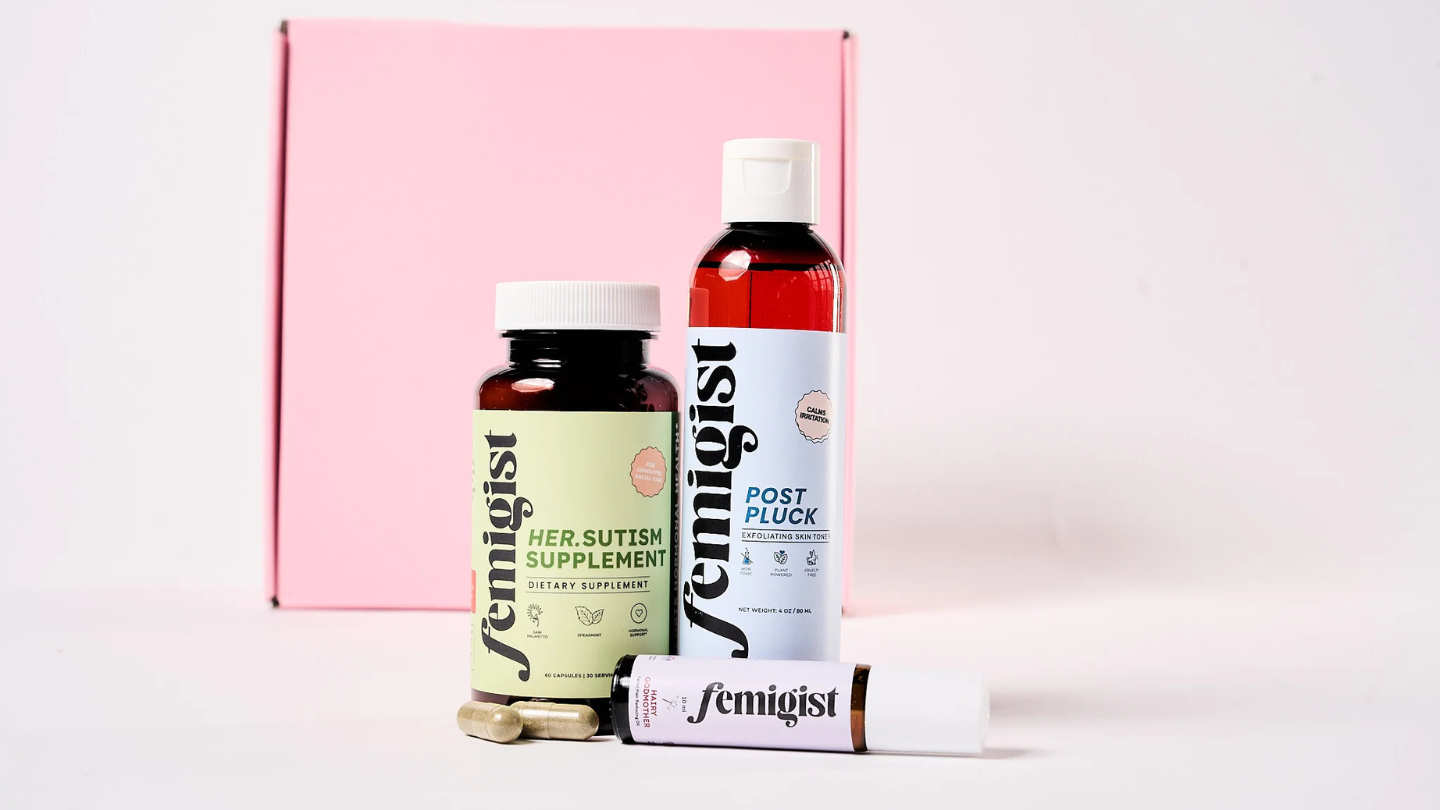
Final Lesson: Start before you feel completely ready
Femigist’s growth did not happen because Amara waited for the perfect moment.
Amara started a hair business before she knew how to do hair. She taught herself how to make wigs over a weekend. She launched her first company from her dorm room. She talked about her hormonal health before knowing it would become a brand. She launched a simpler, lower-cost product first to see how her community would respond. She built her initial website herself and brought in professionals as her business grew.
She created momentum with the resources she had, then used funding to build on what was already working.
Amara's journey is proof that venture capital or bank loans isn't the only pathway to startup funding. Grants, pitch competitions and other non-dilutive opportunities can provide another path—one that allows you as a founder to test ideas, build leverage and preserve more ownership along the way.
No matter what route you choose, the funding works best when you've already done the work to understand your customer, create early evidence and identify how the funding can help you scale.
For early-stage founders, your playbook is clear:
- Start with the resources available to you.
- Build trust before trying to scale.
- Focus on one painful problem first.
- Apply for opportunities before you feel fully established.
- Be specific about what the funding will help you accomplish.
- Measure the results after you receive it.
- Use what you learn to make your next application stronger.
Amara did not begin Femigist with all the answers. She began with a problem she understood, a community willing to listen and the willingness to test what might work.
Then she used each opportunity to build the next version of the business.
Question for you: What could your business become if you gave yourself permission to start before you felt ready?
